Serving Marina, CA and surrounding areas. (831) 946-0384
A wobbling railing is a safety problem, not just an eyesore. We install and replace deck railings in Marina using materials rated for coastal salt air - and we handle the City of Marina permit from start to finish.
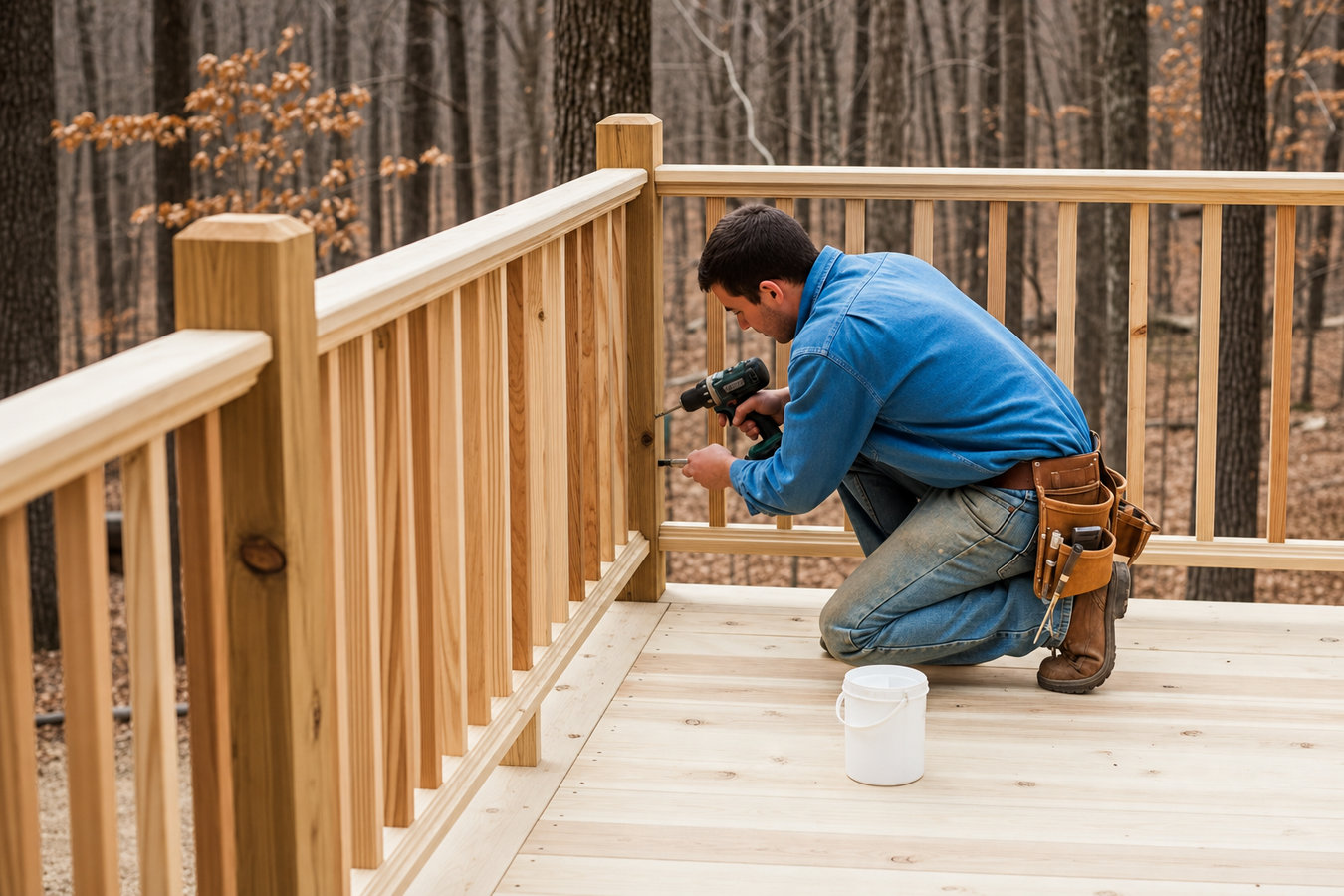
Deck railing installation in Marina, CA involves removing your existing railing system, anchoring new posts to the deck frame, attaching rails and infill panels or balusters, pulling a City of Marina building permit, and completing the work through inspection - most standard deck railing projects are finished in one to two days of physical installation, with the permit review adding one to three weeks before work begins.
Railings are more than a design feature - they are a safety system, and in California any deck 30 inches or more off the ground is required to have one. In Marina, the salt air and persistent fog put extra stress on railing materials that were not chosen with coastal conditions in mind. Posts corrode at the base, wood rots faster than it would inland, and standard steel hardware starts to rust within a few years. Choosing the right system from the start is the most important decision you make on a railing project.
If your existing deck itself is also showing wear, it may make sense to assess the deck frame before the new railing goes in. Our custom deck design and build service can evaluate and repair structural issues so your new railing is anchored to a sound foundation - not just a better-looking version of the same problem.
Stand at the middle of your railing and push firmly outward with both hands. If it moves at all, the posts are no longer anchored securely. A railing that wobbles is a structural failure - it can give way suddenly under the weight of someone leaning against it. This is not a cosmetic problem and it does not fix itself.
In Marina's salt air, metal hardware corrodes faster than it would in an inland city. Rust streaking down from post bases or around screw heads means moisture has reached the connection points. Once corrosion starts there, it weakens the structure faster than the surface staining suggests. By the time the post looks bad, the connection underneath is often worse.
Marina's persistent fog keeps wood damp for long stretches, which accelerates rot. Press your thumb into the base of any wood post - if it gives, the wood has begun to decay. Cracked, gray, or peeling wood that has not been sealed in several years is also a sign the material is breaking down and will not hold a structural load reliably.
Older railings were sometimes built to standards that are no longer considered safe. If you can fit your fist through the openings between the vertical pieces, the spacing does not meet current safety rules. This is a liability issue if a young child is ever on your deck, and it is a problem that shows up in home inspections if you ever sell.
Every railing project starts with a site visit - we measure your deck perimeter, check the condition of the existing frame and posts, and look for any structural issues that need to be addressed before new railings go in. In Marina, that conversation always includes material selection for coastal conditions, because hardware and railing systems that are fine in dryer inland climates can corrode or rot significantly faster here. The North American Deck and Railing Association publishes installation and material standards for deck railings that guide our work on every project.
Once materials are chosen and the permit is submitted, installation typically takes one to two days. We remove the old railing system, set and anchor new posts to the deck frame, attach the top and bottom rails, and install the baluster or infill panels. The posts are the most critical part of the whole system - they need to be anchored properly to transfer load to the deck frame, not just screwed in at the surface. If your project is part of a larger scope, our multi-level deck service can integrate railing installation across all levels as a single permitted project so everything is consistent and inspected together.
Low-maintenance and resistant to coastal corrosion. Best suited for Marina homeowners who want a railing that performs in salt air without requiring frequent upkeep or refinishing.
Stainless steel cable with marine-grade hardware for maximum corrosion resistance. Best suited for homeowners who want to preserve sightlines to the yard or bay without sacrificing durability in a coastal environment.
Composite rails and balusters that look like painted wood but do not rot, warp, or require sealing. Best suited for homeowners who want a clean, traditional appearance without the maintenance demands of natural wood in Marina's damp climate.
Natural wood railing using species and sealants specifically recommended for coastal California conditions. Best suited for homeowners who prefer the look of real wood and are prepared to reseal it on the schedule the material requires.
Marina sits directly on Monterey Bay, and the salt-laden air here accelerates wear on outdoor structures at a rate most inland homeowners have never experienced. Railings that would last 20 years in Salinas or Gilroy may show rust, rot, or coating failure in under ten years in Marina if the wrong materials were used. This is not an exaggeration - it is the single most common feedback we hear from homeowners who had work done by contractors unfamiliar with the coastal environment. The right railing system for Marina uses materials that were designed to resist this specific combination of moisture, salt, and persistent fog. The California Contractors State License Board lets you verify any contractor's credentials before you sign anything - a licensed, insured contractor familiar with coastal work is a significantly lower risk than someone who prices low but does not understand this environment.
Marina's newer neighborhoods - particularly those developed on former Fort Ord land near the Dunes and Cypress Knolls areas - have homes from the 1990s and 2000s where original railing installations are now old enough to be reaching end of life. Many of these homes also have HOA design requirements that govern railing styles and colors. We are familiar with how HOA approval processes work in Marina, and we can help you choose a system that satisfies the association before materials are ever ordered. We serve homeowners throughout Marina and in neighboring communities including Seaside and Monterey, where the same coastal conditions apply.
Reach out by phone or through the contact form. We will ask a few basic questions - how long your deck is, what material your current railing is, and what style you are considering. We respond to all new inquiries within one business day.
We come to your property, measure the deck perimeter, check the frame and existing post conditions, and discuss material options. You get a written estimate with no obligation - railing projects are hard to price accurately without seeing the deck in person.
If your deck is 30 inches or more off the ground, we submit the permit application to the City of Marina before any work begins. Approval typically takes one to three weeks. We handle all communication with the building division - you do not need to make a single call.
Installation takes one to two days. We remove the old system, anchor the new posts, attach rails, and install the infill or balusters. A city inspector verifies the work when it is done - we coordinate that visit. Before we leave, we do a walkthrough with you so you can test the railing yourself and ask any maintenance questions.
We will come to your property, assess the current railing, and give you a written estimate with no commitment - usually within a few days of your call.
(831) 946-0384We do not spec materials that are fine inland and fail early on the coast. Every railing system we recommend for Marina is chosen for its ability to handle salt air, persistent moisture, and the specific conditions along Monterey Bay - so you get lasting performance, not just a good first-year appearance.
We handle the full permit application and inspection coordination with the City of Marina building division. You get inspected, documented work without any paperwork on your end - and a clean permit record that matters when you sell your home. The City of Marina Building Division is the office we work with on every local railing project.
The most common reason railings fail is poorly anchored posts - they may look fine for years and then pull away under load. We anchor every post to the deck frame correctly, not just at the surface, so the railing can handle the force of someone leaning on it firmly without any flex or movement.
Several Marina neighborhoods - especially in the areas developed on former Fort Ord land - have HOAs with specific design standards for railings. We know how these approval processes work locally and can help you choose a system that satisfies your HOA before materials are ordered, so you do not end up redoing work at your own expense.
Coastal-rated materials, properly anchored posts, and a permit pulled without you having to think about it - that is the combination that produces a railing that is actually safe, actually lasts, and actually protects your investment.
If your deck frame needs attention before the new railing goes in, our full custom build service handles structural assessment and rebuild alongside the railing installation.
Learn MoreBuilding a new tiered deck? Railing installation across all levels can be built into the same permitted project so everything is consistent and inspected together.
Learn MoreMarina's railing contractors book out as the season picks up - reaching out now means your project is scheduled, permitted, and finished before you need it most.